What I Focused On

Supporting different user intents at subscription decision moments.
Reducing friction across key decision paths: upgrade, downgrade, and cancellation.
Making plan choices and consequences clear before commitment.
Why It Matters
Subscription decisions are moments of intent, not just transactions.
How clearly these choices are presented can shape whether users upgrade, downgrade, or leave.
Conversion
Claiming the Reward: Converting Activated Users
After completing the product tour and using Laxis in a real Zoom meeting, users unlock a 1-month free Premium trial.
This moment represents a high-intent but fragile conversion point: users have experienced value, but still hesitate to commit.
What I Designed
I focused on a streamlined claim experience that:
Clearly frames the trial as free today, paid later
Reduces cognitive load during plan selection and payment
Immediately reinforces value after the upgrade with a guided premium introduction
Expansion Intent
Adding Seats (Team Expansion)
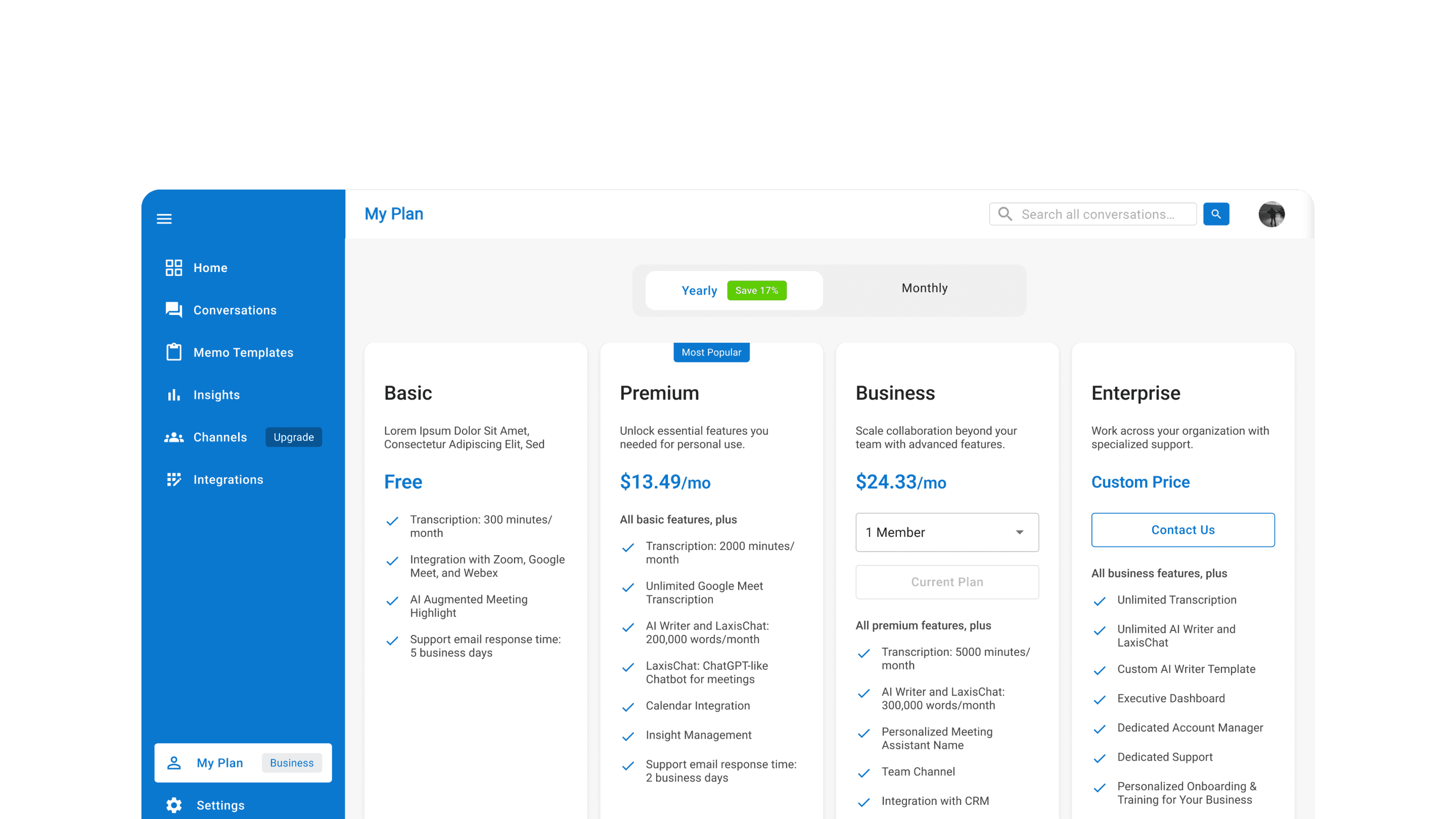
After upgrading to a paid plan, some users return to the pricing page with a new intent: expanding usage by adding team members.
This flow supports users who already trust the product but need flexibility as their team grows.
What I Designed
Inline seat selection directly within the plan card
Real-time price updates based on team size
A dedicated checkout view that clearly summarizes billing period, total cost, and cancellation expectations
Retention Intent
Churn Prevention (Downgrade Path)
When users attempt to cancel their subscription, it often signals a shift in needs rather than complete disengagement.
This flow treats the first cancellation attempt as a decision moment, offering a lower-commitment plan that preserves core value while respecting user choice.
What I Designed
A cancellation confirmation modal that surfaces downgrade as a primary alternative
Clear side-by-side comparison between current plan and downgraded plan
Explicit messaging around billing timing and when the downgrade takes effect
A final confirmation state that reinforces user control and next steps
Retention Intent
Churn Prevention (Cancellation Path)
When users attempt to cancel their subscription, the system treats this as a high-intent churn moment and introduces a layered retention flow before final cancellation.
The goal is to reduce immediate churn by offering contextual incentives, while still giving users a clear and respectful exit path.
What I Designed
A two-step churn prevention flow that progressively introduces retention options without blocking user intent
A targeted temporary discount offer surfaced at the first cancellation attempt to address price sensitivity
A lightweight cancellation reason step to capture qualitative churn signals for future product improvement
A clear final confirmation state that reassures users and keeps the relationship open for reactivation